The Clinical Team Behind MindForge
MindForge care is designed and delivered by a doctor-led, multidisciplinary team — clinicians who specialize in the nervous system: one team in one place, working from shared diagnostics on one coordinated plan per patient. This page is who they are, what they're credentialed in, and the standard they hold themselves to.
How this team works
Neurological care is usually a collection of separate appointments. MindForge was built as one clinical unit: the clinician who evaluates you, the clinician who treats you, and the clinician who re-tests you are working from the same data, in the same building, on the same plan.
The clinicians
Dr. Dalia El-Hag, PT, DPT, NCS
Director of Neurologic Performance and Rehabilitation
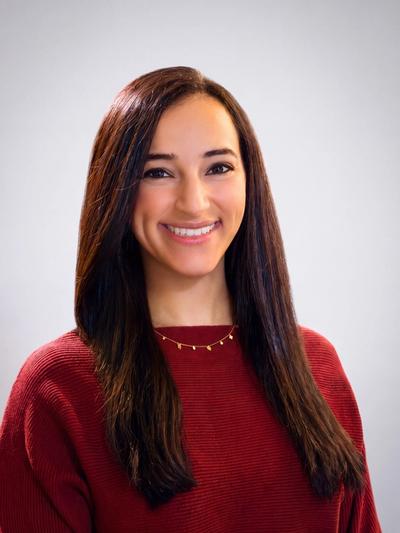
Dr. El-Hag is a Board-Certified Neurologic Physical Therapist. She earned her Doctor of Physical Therapy degree from UT Southwestern Medical Center and is a proud SMU alumna. She has a special interest in the brain's remarkable capacity to adapt, learn, and heal, as well as the body's innate ability to recover and respond to targeted movement. She takes a patient-centered, evidence-informed approach, integrating principles of neuroplasticity, motor learning, and whole-body performance into individualized treatment plans.
When she's not with patients, she enjoys traveling, Pilates, playing pickleball, and being the "fun aunt" to her nieces and nephew.
Dr. Emily Kalambaheti, DACNB, FACFN
Director of Neurologic Performance and Rehabilitation
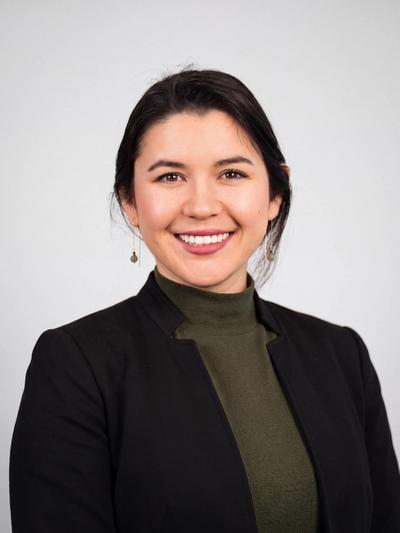
Dr. Kalambaheti is Board-Certified DACNB with additional certifications in qEEG, TMS, and HBOT, and a passion for neurological optimization. She examines patients and designs non-invasive neurological rehabilitation programs for people with neurological conditions, while continuously investigating the most efficient and effective technologies available for neurological rehabilitation.
She also speaks publicly about brain health, neurodevelopment, neurorehabilitation, and improving the standard of care for neurological and psychological wellness.
Medical Directors
MindForge's medical oversight spans Pediatric Neurology, Emergency Medicine, and Longevity Medicine. The Medical Directors also oversee our Institute for Translational Neurotherapeutics.
The standard behind the care
Credentials get a clinician to the table; the standard is what happens at it. Every MindForge program runs doctor-led, and the full team reviews your data. Each modality is delivered with trained expertise. The clinicians hold board certifications, stay in continuous pursuit of the latest research on the brain, and work inside a documented, measured model of care.
Two commitments hold everywhere at MindForge. First, measurement: your function is quantified at baseline and re-tested against your own data, so progress is something you can see in data rather than something you're asked to take on faith. Second, honesty about limits: no one on this team promises outcomes or talks in cures. When the data says a program is working, you'll see it; when something isn't the right fit, we say so and route you toward who can help. And your existing physicians stay your physicians — records flow back, and coordination with them is part of the job.
Who you'll work with
On your Discovery Day, the clinical team runs your comprehensive neurological evaluation and reviews the findings with you the same day — your own data on the screen, a clinician explaining what it means. If a program follows, your clinical lead builds it from those findings and works with you session by session, adjusting as your data changes — one team, one plan. And at the end, the same instruments that measured your baseline measure what changed, so you leave with the comparison in hand.
Leadership
Ethan Joubran — Founder & CEO
Ethan grew up inside medicine — in the operating room and the laboratory alongside his father in pioneering organ transplant procedures. What he saw there stayed with him: when surgical skill, science, and technology work as one system, the body can be given another chance — lives restart. He has spent his career building toward the same integration for the brain: technology and deep clinical neurology joined in a single platform for optimized brain function.
He trained as an electrical engineer at Southern Methodist University, and the brain pulled him in. As an undergraduate he designed and built a brain stimulation device to induce coherent brain waves — the start of a lifelong study of how the brain organizes itself: circuits, consciousness, the physics underneath, and what it takes to keep a brain at its best. He paired the engineering degree with an MBA in finance and strategy from SMU's Cox School of Business; an early career spanning engineering, strategy consulting, and investment work — from start-ups to the Fortune 1000 — taught him what endures, and what doesn't, when you set out to build something of real value.
The brain became the career. Across more than a decade in intensive neuro-rehabilitation, Ethan has held operating roles in three neuro-ventures and co-founded two of them: he wrote the business plan for an intensive neuro-rehabilitation company and ran its operations as it scaled to two centers, then co-founded a second and helped grow it to three centers across three states, advising it through to its exit. As co-founder and an inventor at ReNeuro Robotics, he builds the instruments themselves: clinical robotics platforms engineered for neuro-rehabilitation — among them MARC, the whole-body rotation system in use at MindForge, and EVA — backed by an intellectual-property portfolio. The through-line is the conviction MindForge is built on: brain care gets better when it gets more precise, more measurable, and more repeatable.
MindForge is where all of it converges. He built it for the people conventional care has not resolved — one place where a doctor-led clinical team works from shared data on a single plan, inside a system engineered to measure what matters and rewire it for optimal performance. The mission is personal: his dad wanted him to become a doctor. He became an engineer instead — because a doctor helps one patient at a time, and he set out to engineer the clinical platform that could help tens of thousands.
*Looking to refer a patient? See our physician referral page.*
Meet us on a 15-minute call — the team you'd be working with is the team on this page.